When your car feels confident and predictable, you probably do not think much about steering or suspension. You turn the wheel, the car responds, and you carry on with your day. That easy, controlled feel comes from a lot of parts working as a team.
Steering and suspension are closely tied together. If one side starts wearing out, the other often feels the consequences. Here’s how they work together, what changes when something gets tired, and what signs deserve attention before they turn into a safety issue.
What Steering And Suspension Each Do
Steering is the system that points the front wheels where you want to go. It translates your steering wheel input into tire movement, and it should do so with minimal play or delay. Suspension is the system that supports the vehicle’s weight, keeps the tires planted, and controls how the body moves over bumps, dips, and during braking and turning.
The overlap is the tires. Steering aims the tires, and suspension keeps them pressed against the road with the right pressure and angle. If the tire contact is unstable, steering can feel vague. If steering components are loose, the suspension cannot keep the vehicle tracking straight.
How Weight Transfer Affects Control And Stopping
Every time you brake, accelerate, or turn, the car’s weight shifts. When braking, the weight moves forward and loads the front tires. During acceleration, the weight moves rearward. In a turn, weight shifts to the outside tires. Suspension controls this movement so the tires keep a consistent grip.
When suspension is worn, weight transfer gets sloppier. That can mean extra nose dive, extra body roll, and a car that takes longer to settle after a maneuver. In real driving, this can reduce confidence during quick lane changes and can increase stopping distance on rough roads because the tires are not staying as planted as they should.
Steering depends on that stability. Even perfect steering parts cannot make a car feel secure if the front end is bouncing, rolling, or shifting on worn bushings.
The Key Parts Where Steering And Suspension Meet
A lot of drivers think of steering and suspension as two separate systems. Mechanically, they overlap in several places.
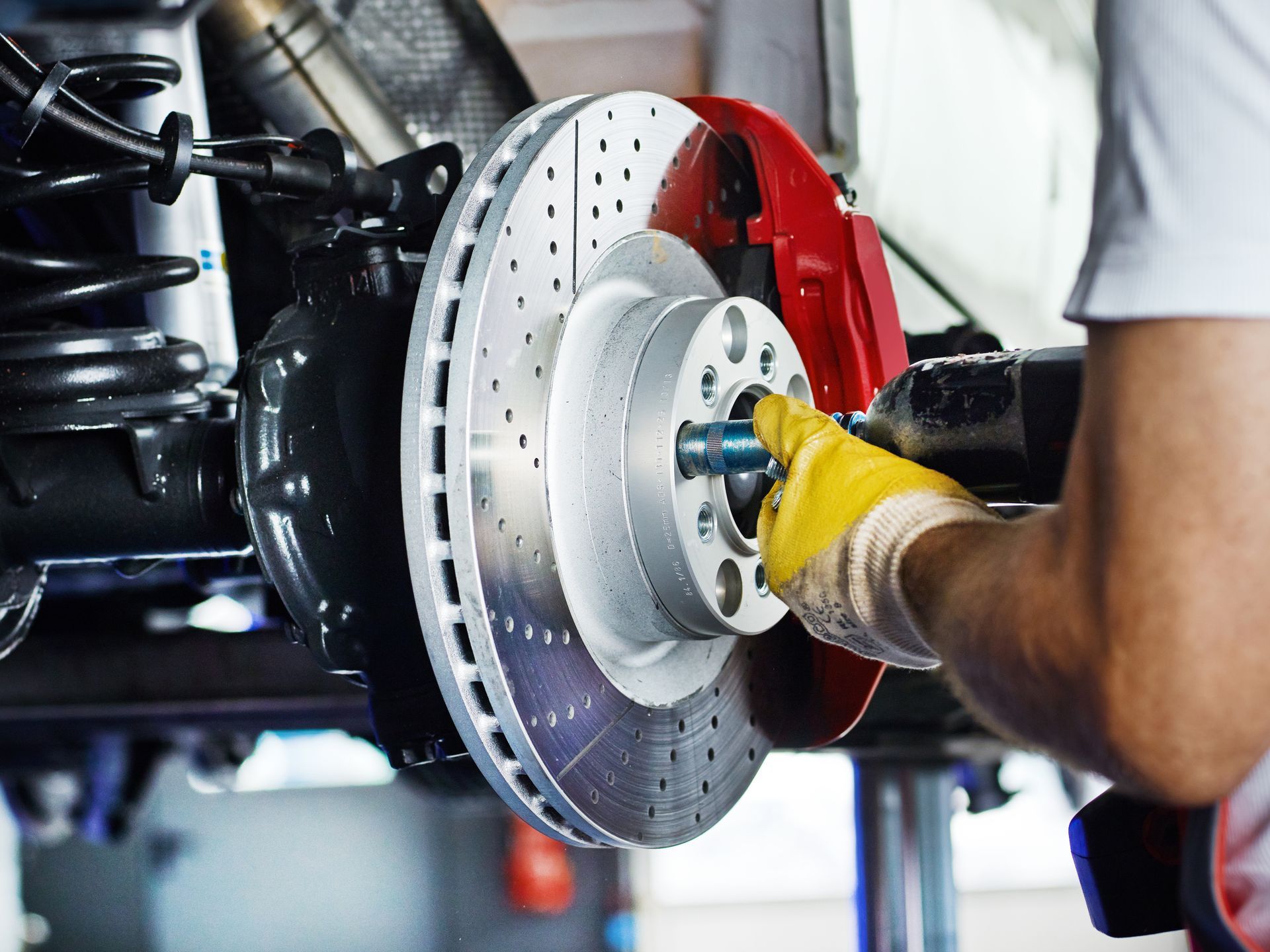
Control arms and their bushings help locate the wheel while still allowing controlled movement. Ball joints act like pivots that let the wheel move up and down with suspension travel while still turning left and right for steering. Tie rods connect the steering rack to the wheels, so any looseness there turns into wandering or imprecise response. Struts, shocks, and mounts control motion, and if that control fades, the tire’s contact with the road gets less consistent.
We’ve seen situations where a driver came in focused on steering feel, and the real culprit was suspension wear that let the front end move around under load.
What Wear Feels Like Behind The Wheel
The best clues usually show up while driving, not while the car is parked. A loose or worn component often reveals itself when the vehicle is loaded, like during braking, turning, or hitting bumps.
Here are patterns that commonly point to steering and suspension wear:
- A drifting or wandering feel at highway speed, even on a flat road
- A clunk over bumps or during low-speed turns into a driveway
- Extra bouncing after dips or speed bumps instead of settling quickly
- Vibration that changes with turning or braking, not just at one speed
- A steering wheel that does not return to center as naturally as it used to
If the dashboard traction or stability warnings show up along with these symptoms, that is another reason to have the chassis checked. Those systems depend on predictable wheel behavior.
Why Alignment Is The Middleman
Alignment is where steering and suspension geometry meet. Alignment angles affect how the tires track, how quickly they respond, and how evenly they wear. If the alignment is off, the car may pull, the steering wheel may sit off-center, and the tires can develop wear patterns that create noise and vibration later.
The tricky part is that worn parts can cause alignment to shift. You can set alignment numbers, but if a control arm bushing is allowing movement under load, the angles change while you drive. That is why an alignment can look fine on paper yet the car still feels unstable on the road.
A good approach is to check for worn components first, then align the vehicle after the worn parts are corrected. That way the alignment is not trying to compensate for parts that are no longer holding position.
A Simple Decision Guide For When To Get It Checked
Some changes are subtle, so it helps to have a clear decision guide. If any of the items below are happening repeatedly, it’s worth scheduling an inspection rather than hoping it settles down on its own.
- If the car wanders and you are making constant small steering corrections, have the front end checked.
- If you hear clunks over bumps or during turning, have the steering and suspension joints inspected.
- If tire wear looks uneven, especially inside-edge wear or cupping, address it before the tires get ruined.
- If braking feels less stable on rough roads, suspension control may be weak even if pads and rotors are fine.
- If you feel vibration that changes with load, turning, or braking, inspect the components that locate the wheels.
Our technicians focus on finding the first worn link in the chain, because one loose part can make several symptoms show up at once.
Get Steering And Suspension Service in Miami, FL, with Rodriguez Brothers Auto
We can inspect your steering and suspension components, identify what’s worn, and explain how it’s affecting safety and control. We’ll also look at tire wear and alignment angles so the repair solves the root problem instead of chasing symptoms.
Call
Rodriguez Brothers Auto in Miami, FL, to schedule a steering and suspension inspection and get your vehicle feeling predictable again.